


I’ll never forget the day my Longhorn arrived. Two delivery guys wheeled this 226-pound beast up my driveway, and my wife gave me that look. You know the one. The “this better be worth it” look.
Four years later? Best BBQ decision I ever made.
Let me tell you everything I’ve learned about the Oklahoma Joe Longhorn — the good, the bad, and the burnt ends.
Why I Chose the Oklahoma Joe Longhorn Smoker

View Deal Here
Check Price on Amazon
I’d been smoking on a cheap $200 offset for two years. That thing was a nightmare. Temperatures swung 100 degrees. Smoke leaked everywhere. My briskets came out like shoe leather.
I wanted something better but couldn’t justify $2,000 for a top-tier smoker. The Oklahoma Joe Longhorn smoker hit that sweet spot at around $800.
Here’s what sold me: thick steel construction, a massive cooking area, and a firebox big enough to actually fit logs. Not pieces of logs. Actual logs.
The weight told me everything I needed to know. Cheap smokers weigh 80 pounds. This one? 226 pounds of solid steel. That weight means heat retention. It means durability.
Oklahoma Joe Longhorn Dimensions: Size Matters

The Oklahoma Joe Longhorn dimensions are significant. We’re talking 64.3 inches wide, 55.5 inches tall, and 35.5 inches deep.
My wife wasn’t thrilled about losing that much patio space. I promised her the best ribs she’d ever tasted. Three weeks later, she stopped complaining.
The cooking chamber gives you 751 square inches of space. I can fit three full briskets in there. Or eight whole chickens. Or twelve racks of ribs using rib racks.
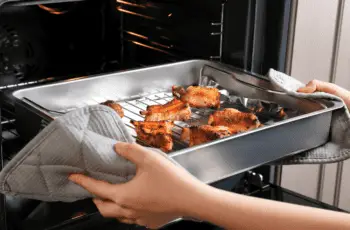
The secondary rack adds another 309 square inches up top. Perfect for sausages, chicken wings, or warming sauce.
The firebox is genuinely huge. I can fit 16-inch logs without any struggle. Coming from a cramped firebox where I had to break logs into pieces, this felt luxurious.
My First Cook: A Humbling Experience

That first brisket? Disaster.
I thought I knew what I was doing. I didn’t. Temperatures bounced from 200 to 300 degrees. I burned through a bag of charcoal in four hours. The brisket came out dry and under-smoked.
My neighbor asked if I’d tried the oven instead. Ouch.
But here’s the thing — I learned more from that failure than I would have from success. I figured out my dampers. I understood how wind affected my temps. I learned patience.
Cook number five was when everything clicked. That brisket had a smoke ring a half-inch deep. The bark was perfect. My neighbor didn’t crack jokes that time.
The Oklahoma Joe Longhorn Combo Grill Setup
The Oklahoma Joe Longhorn combo grill works as both smoker and grill. This flexibility justified the space it takes up.
I’ve grilled steaks in the main chamber over hot coals. The results blow away anything from a gas grill. That char, that smoke flavor — you just can’t replicate it.
The firebox has its own cooking grate. Most people ignore this, but I use it constantly. While brisket smokes in the main chamber, I sear steaks on the firebox grate. Or keep sauce warm. Or grill burgers for my kids who won’t wait 12 hours for brisket.
One cooker replaced both my old smoker and my charcoal grill. That saved me both money and space.
Temperature Control: The Real Challenge

Let me be straight: the stock Oklahoma Joe Longhorn offset smoker has hot spots. The area near the firebox runs 25-50 degrees hotter than the chimney end.
At first, this frustrated me. Why couldn’t it just be even?
Then I learned to use it. Chicken thighs that need higher heat go near the firebox. Delicate fish goes toward the cooler chimney end. Briskets that are done but need to rest hang out in the cool zone.
The damper system gives you solid control once you understand the lag time. I adjust dampers and wait five minutes before checking again. Beginners make the mistake of constantly tweaking. That creates temperature chaos.
My target is 225-250 degrees for most smoking. I don’t stress if it hits 260 or drops to 215. That range works fine.
Must-Have Oklahoma Joe Longhorn Accessories
The Oklahoma Joe Longhorn accessories market is huge. Some are essential. Others are money-wasters.
Essential Accessories:
A digital thermometer comes first. The stock gauge on the lid? Garbage. I’m talking 50 degrees off. I bought a ThermoWorks Smoke with dual probes. Life-changing.
High-temp gasket tape costs $15. Seal every gap — the lid, the doors, the firebox connection. My fuel consumption dropped by 30% after adding gaskets.
A charcoal basket keeps coals organized and burning efficiently. You can make one from expanded metal for $20. Mine paid for itself in saved charcoal after three cooks.
Read more: Traeger Woodridge Pro Review
Nice to Have:
The Oklahoma Joe Longhorn grill cover runs about $60. Worth it if you don’t have a shed or garage. My smoker lives on an uncovered patio, so the cover prevents rust.
Rib racks expand capacity. I can smoke 12 racks vertically when I’m feeding a crowd. Twenty bucks well spent.
A welding blanket insulates the chamber during winter. I smoke in Minnesota. Without insulation, winter cooking would be impossible.
Oklahoma Joe Longhorn Parts: What Breaks
The Oklahoma Joe Longhorn parts are easy to find and reasonably priced. That’s a huge advantage over weird brands.

View Deal Here
Check Price on Amazon
I’ve replaced the cooking grates once every four years. They cost about $50. Some people upgrade to stainless steel immediately. I didn’t see the need.
The firebox grate is on its third replacement. These take direct heat and eventually warp. They’re $25. Keep a spare.
My temperature gauge died after 18 months. I didn’t replace it because I only use digital thermometers anyway.
The wheels have held up perfectly. I’ve rolled this thing over gravel, grass, and cracked concrete. No issues.
Paint touch-ups happen annually. High heat in the firebox causes peeling. A $10 can of high-temp BBQ paint fixes it.
The Oklahoma Joe Longhorn combo parts list shows every component is individually replaceable. When something breaks, you fix that part. You don’t junk the whole smoker.
Oklahoma Joe Longhorn vs Highland: Size Comparison
| Feature | Longhorn Reverse Flow Offset Smoker | Highland Reverse Flow Offset Smoker |
|---|---|---|
| Price (approx.) | $899 | $389 (often $150-200 less than Longhorn) |
| Primary Cooking Area | 751 sq in | 619 sq in |
| Total Cooking Area | 1,060 sq in | 900 sq in |
| Dimensions (D x H x W) | 35.5 x 55.5 x 64.3 in | 33.5 x 53 x 57 in |
| Weight | 268 lbs | ~168 lbs |
| Suitable For | 15-20 people (no relay cooking) | 4-6 people (plenty for small groups) |
| Other Features | Optional smokestack locations, large charcoal basket, cool-touch handles, four baffles for even heat | Similar features: optional smokestack, baffles, cool-touch handles, but more compact |
| Advice | Choose if you have space and budget; grow into the capacity | Choose if space or budget is tight; solid for beginners |
Oklahoma Joe Longhorn vs Char Griller Grand Champ
| Feature | Oklahoma Joe's Longhorn | Char-Griller Grand Champ |
|---|---|---|
| Price (MSRP/Approximate Retail) | $899.99 (official); often $500-600 at retailers | $729.00 (official); $250-300 more than Longhorn per user experience |
| Total Cooking Area | 1,060 sq in | 1,200 sq in |
| Primary Cooking Area | 751 sq in | 780 sq in |
| Secondary Cooking Area | 309 sq in | 420 sq in (inferred from total - primary) |
| Dimensions (W x H x D) | 64.3 x 55.5 x 35.5 inches | 71 x 57 x 35 inches |
| Weight | 268 lbs | 254 lbs |
| Material | Heavy-gauge steel; porcelain-coated wire grates | Heavy-duty steel; expanded metal cooking grates, cast iron sear grates |
| Key Features | Reverse flow option, 4 baffles, large charcoal basket, cool-touch handles, wagon-style wheels | Side Fire Box, EasyDump Ash Pan, dual dampers, insulated body, folding shelf |
Modifications That Made the Difference
Every serious Longhorn owner mods their smoker. Here’s what I did:
Gasket Tape (Day One):
I sealed every gap before my first cook. The lid, doors, firebox connection — everywhere metal meets metal.
Temperature stability improved immediately. Fuel consumption dropped. This $15 mod is non-negotiable.
Charcoal Basket:
I built one from expanded metal. It took me an hour and cost $20. Coals burn cleaner and longer because air flows underneath instead of getting smothered against the walls.

Baffle Plate:
I added a steel plate below the cooking grate on the firebox side. This shields meat from direct heat and helps distribute temps more evenly.
A local metal shop cut the plate for $40. Installation took 20 minutes.
Chimney Extension:
I extended the chimney down to grate level. This pulls smoke more directly across the meat instead of just skimming the top.
This mod works great in my area. If you live somewhere windy, skip it.
Silicone Sealant:
After gasket tape, I sealed the remaining small gaps with high-temp silicone. The firebox-to-chamber junction especially benefits.
Eight dollars and 20 minutes. Easy win.
Real Cooking Results After 4 Years
Let me tell you what actually comes off this smoker.
Brisket:
I’ve smoked over 50 briskets on my Longhorn. The smoke rings rival anything from competition teams. The bark develops perfectly.
A 12-pound brisket takes about 12-14 hours at 250 degrees. I trim to 1/4 inch fat cap. Season with salt and pepper. Place fat-side up in the middle of the chamber.
The results consistently impress people who know good BBQ. That’s the real test.
Pulled Pork:
Pork shoulder is forgiving and delicious. I cook two 8-pound shoulders at 275 degrees. They fit comfortably with room for a pan of beans underneath.
I wrap in foil at 165 degrees to power through the stall. Cook to 203-205 internal temp. The bone pulls clean when it’s done.
This is party food. Sixteen pounds of pulled pork feeds 25-30 people easily.

Ribs:
I can fit 12 racks vertically using rib racks. I use the 3-2-1 method: 3 hours unwrapped, 2 hours wrapped, 1 hour unwrapped with sauce.
The ribs from my Longhorn get that perfect smoke flavor and tenderness. My neighbor says they’re better than his favorite BBQ restaurant. I don’t argue.
Chicken:
Whole chickens smoke at 275-300 degrees. The challenge is crispy skin. I finish hot to crisp it up after smoking low for flavor.
The secondary rack is perfect for wings and thighs. These smaller pieces actually benefit from the slightly cooler zone up top.
Long-Term Durability: Year Four Reality
My Longhorn shows its age but remains functional.
The firebox paint has peeled in high-heat areas despite annual touch-ups. Surface rust appears but doesn’t penetrate deep. I wire brush and repaint once a year.
The cooking chamber looks better. Lower temps and a cover mean less wear. Some rust around the door edges where moisture collects, but nothing serious.
I’m on my third set of cooking grates. They last 2-3 years before the porcelain coating chips off and rust takes over. Thirty-dollar replacement every few years is acceptable.
The firebox grate is on its third replacement. These are consumables. Keep a spare.
Wheels remain solid. Hinges work smoothly. The handles are fine.
Overall, the Longhorn proves durable for regular use. It’s not a lifetime heirloom piece. But 10+ years seems realistic with basic maintenance.
Pros and Cons
| pros | cons |
|---|---|
|
|

View Deal Here
Check Price on Amazon
Who Should Buy the Longhorn?
The Oklahoma Joe Longhorn makes sense if:
You want a great BBQ without spending $2,000. You have patio space for a large smoker. You’re willing to learn fire management. You enjoy the process, not just the end result. You cook for groups regularly.
Skip the Longhorn if:
You want push-button simplicity. You have limited space. You only cook for 2-3 people. You’re unwilling to do basic mods. You get frustrated easily.
FAQs
1. What is the total cooking surface area of the Longhorn Reverse Flow Offset Smoker?
The smoker offers 751 square inches of primary cooking space and 309 square inches of secondary cooking space, totaling 1,060 square inches.
2. What materials is the Longhorn made from?
It is constructed from heavy-gauge steel for durability, with porcelain-coated wire grates. The steel thickness is around 1/8″ to 3/16″ to 1/4″ in various parts, such as the main cooking chamber lid.
3. What is reverse flow technology, and how does it work on this smoker?
Reverse flow allows for even heat and smoke distribution by routing smoke under baffles and back through the cooking chamber. The Longhorn has optional smoke stack locations to switch between reverse flow and traditional offset smoking.
4. Is the firebox big enough to cook with wood only, without charcoal?
Yes, the firebox can handle wood-only cooking, though wood pieces should be no longer than 10 inches. Many users start with a small amount of charcoal and then add wood logs.
5. What modifications are commonly recommended for better performance?
Common mods include installing lid gaskets and clamps for better sealing, adding tuning plates for even heat, using high-heat caulk at joints, and replacing the inaccurate built-in thermometer with digital probes.
6. How do I maintain consistent temperatures?
Use tuning plates to even out heat distribution, add a water pan for humidity and stability, preheat wood before adding, and monitor with accurate thermometers. It may take 2 hours to stabilize, and adjust vents accordingly.
7. What are the dimensions and weight of the smoker?
Assembled dimensions are 35.5 inches deep x 55.5 inches high x 64.3 inches wide, with a weight of 268.30 lbs.
8. Does the Longhorn rust easily, and how to prevent it?
It can rust over time, especially if paint peels. Users recommend seasoning properly, covering when not in use, and applying high-temperature paint if needed. The heavy-gauge steel helps with durability.
9. Can I use the Longhorn for grilling as well as smoking?
Yes, it supports high-heat grilling over charcoal in the firebox, and the main chamber can be used for smoking or indirect grilling.
10. What is the warranty on the Oklahoma Joe’s Longhorn?
It comes with a 2-year warranty on all parts, including grates, emitters, other parts, and the lid/firebox.
Learn More About Grilling
If you want to learn more about grilling, check out these other helpful resources!


Popular Buying Guides

Recently Published Posts


